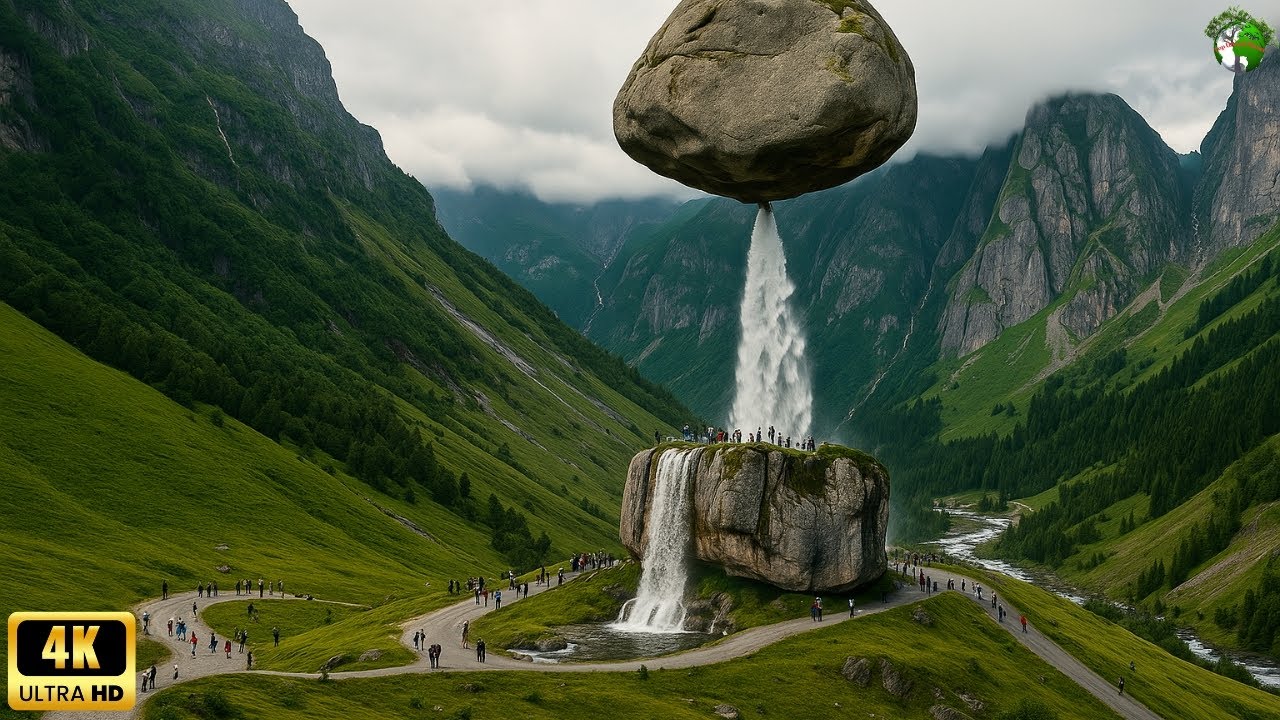
Nature is a master of disguise. While we often admire the grandeur of a mountain range or the calm of a forest, the true “secrets” of our planet lie in the invisible connections and ancient rhythms that have hummed along for billions of years.
If you’ve ever felt a sense of wonder while walking through the woods, you aren’t just imagining it—you are witnessing a complex, highly engineered system at work. Here is a look behind the curtain at the secrets of nature.
1. The “Wood Wide Web”: How Trees Talk
One of the most profound secrets of the forest is that trees are not solitary individuals; they are part of a massive social network. Beneath the soil, a vast web of mycorrhizal fungi connects the roots of different trees.
-
Sharing Resources: Older “Mother Trees” use this network to send excess sugar to younger saplings struggling for sunlight.
-
Warning Signals: When a tree is attacked by insects, it can release chemical signals through the fungi to warn neighboring trees to boost their immune defenses.
2. The Golden Ratio: Nature’s Blueprint
Have you ever wondered why a seashell looks so perfectly balanced, or why sunflower seeds spiral with such precision? Nature follows a mathematical code known as the Golden Ratio (roughly $1.618$).
This geometric pattern, also called the Fibonacci sequence, allows plants to pack the maximum number of seeds or leaves into the smallest possible space. It is the secret formula for efficiency and beauty found in everything from hurricanes to the shape of galaxies.
3. The Power of “Forest Bathing”
The secret to why we feel better in nature isn’t just “fresh air.” Trees release organic compounds called phytoncides. These are natural oils that plants use to protect themselves from bacteria and insects.
When humans breathe in these compounds, our bodies respond by:
-
Increasing the production of “natural killer” cells that fight off illness.
-
Lowering cortisol (the stress hormone) levels.
-
Lowering blood pressure and heart rates.
4. Bioluminescence: The Living Light
In the deep ocean—where sunlight never reaches—creatures have developed the secret of “living light.” Bioluminescence is a chemical reaction that allows organisms like jellyfish, anglerfish, and even some fungi to glow in the dark.
This isn’t just for show; it’s a vital survival tool used for:
-
Luring Prey: Using light as a fishing lure.
-
Communication: Signaling potential mates in the abyss.
-
Camouflage: Counter-illumination to blend in with the faint light from above.
5. The Resilience of Extremophiles
Nature’s ultimate secret is its sheer persistence. Scientists have discovered extremophiles—microorganisms that live in conditions that would be instant death for most life forms. They thrive in volcanic vents, under miles of ice, and even in the vacuum of space. This tells us that life is not a fragile accident, but a relentless force capable of adapting to almost any environment.
Final Thoughts
The secrets of nature remind us that we are part of a deeply interconnected system. Every leaf, fungus, and ocean current plays a role in a global symphony that we are only just beginning to understand. The next time you step outside, remember: there is much more going on beneath the surface than meets the eye.